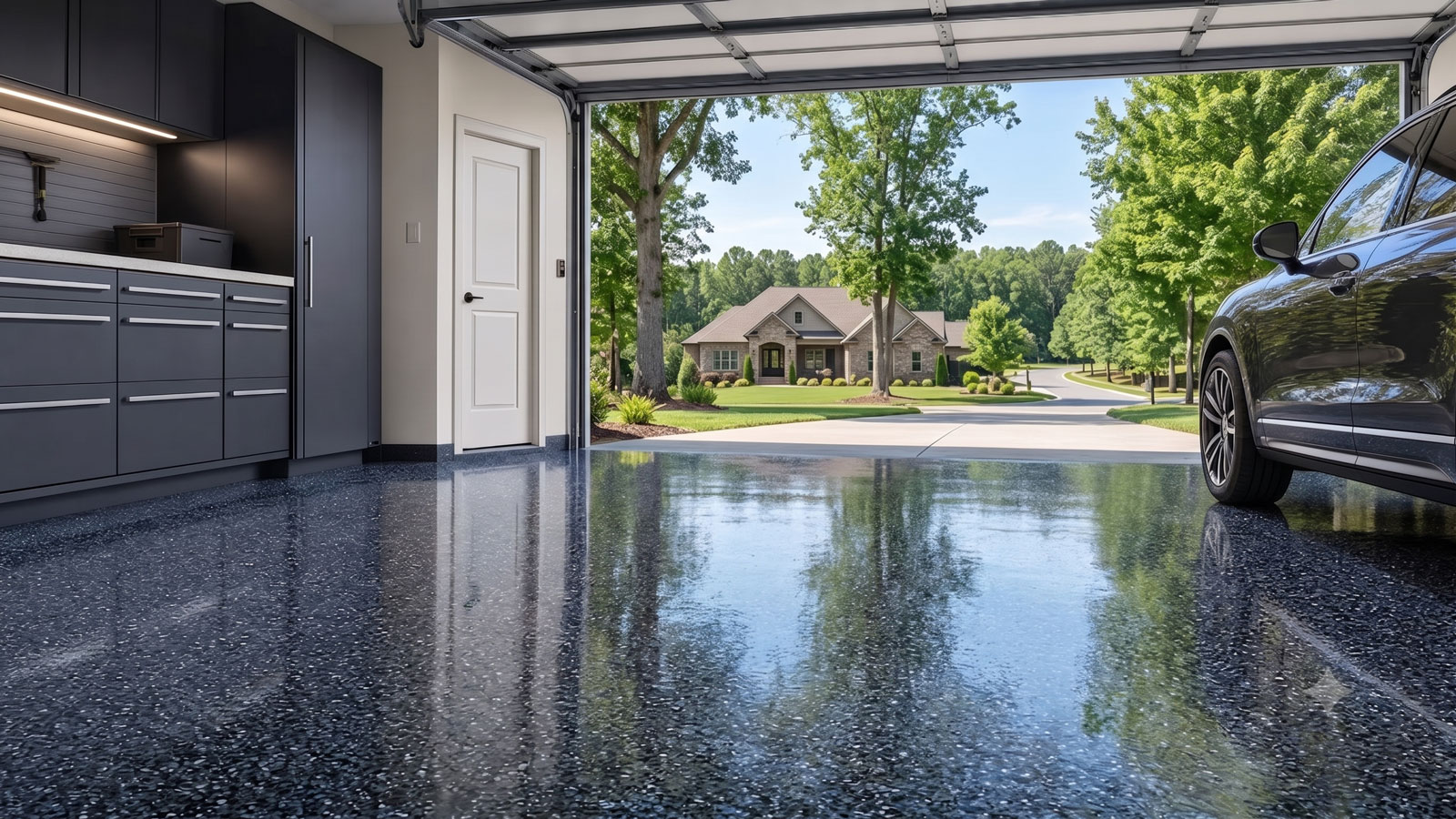
Garage Floor Coating in Columbia, MD
Floor Coating Services in Columbia, MD
Columbia is a master-planned Howard County community rather than an incorporated city with a separate municipal government. Its New Town district was established in 1965 on roughly 13,690 acres, began developing around Wilde Lake and Lake Kittamaqundi in 1966, and opened downtown in 1967. County records say the district expanded to roughly 14,272 acres by 2001, about 94 percent then developed. These documented phases can help frame construction-history questions, but a Columbia house's development period does not tell a contractor when its garage slab was poured.
Howard County's New Town zoning distinguishes planned village centers, lower-density residential districts, townhouses, employment uses and open space. A county task force formed in May 2025 to review how those regulations support the planned community today. That framework matters for housing variety, private access and drainage responsibilities, but public open-space acreage and a nearby lake do not prove that a particular slab is damp.
For everyday parking, Maryland winter road treatment brings snowmelt and grit inside, while summer rain may enter only where a driveway or roof system directs it. A sound properly prepared epoxy, polyaspartic or decorative-flake finish may make normal cleanup easier. The coating cannot correct an outside runoff path or active structural crack, so a reliable quote should detail slab assessment, prior treatments, grinding, repairs, texture and curing.
Local Market Insight
Howard County created Columbia's New Town district in 1965; the planned district grew from roughly 13,690 to 14,272 acres and was 94 percent developed by 2001. A task force appointed in May 2025 reviewed New Town zoning. Different building phases and village formats call for property-specific concrete assessment.
What Affects the Cost of Garage Floor Coating in Columbia?
A Columbia garage from an early village period may have a replaced or recoated slab, while a later residential floor can retain original curing products. Neither planned-community age nor a neat appearance proves coating readiness.
The estimate should reflect the actual footprint, previous coatings, concrete soundness, storage, water pathways and full application schedule. A local lake or planned open space is not a basis for assuming substrate moisture.
- New Town construction phases: Columbia's housing was built across decades, and garages may have changed later. Ask about the slab's actual pour, repours, paints and patches rather than applying a citywide age rule.
- Curing compounds and prior sealers: Relatively recent or resurfaced concrete can contain treatments that affect adhesion. Mechanical preparation should reach an appropriate profile and address incompatible material before installation.
- Village access and storage: Townhouse-related parking, detached spaces and standard attached garages create different access and edge requirements. Include movement of stored belongings and equipment staging in the scope.
- Private driveway and stormwater pathways: County planning for lakes and open space cannot diagnose a garage. Inspect actual grades, downspouts, threshold marks and persistent dampness before deciding whether additional work is required.
- Cracks and winter deposits: Deicing residue, oil, spalls and old repairs should be evaluated before coating. A cosmetic finish cannot halt active movement, and routine winter cleanup remains necessary.
- System choice and vehicle return: Flake density, texture and topcoat performance should fit normal household traffic. Ask about UV exposure, manufacturer temperature limits and the complete curing window.
Call for a clear, project-specific estimate — or request one online.
Columbia's 1965 New Town Plan and Multiple Garage Generations
Howard County approved Columbia's original New Town Preliminary Development Plan in 1965, and construction of Lake Kittamaqundi, Wilde Lake and the first commercial buildings began in 1966. Downtown opened in 1967. County task-force material says the district later expanded to about 14,272 acres and had around 31,600 homes, 5,200 acres of open space and 94 percent of its land developed by 2001. These facts demonstrate planned growth across distinct periods rather than uniform garage concrete.
The district permits different residential densities and forms, from lower-density houses to townhouse neighborhoods. A garage's shape and access may therefore vary, but a property-specific inspection is needed to know whether the slab was repoured, sealed or repaired. An earlier-generation home may have a newer floor; a later one may contain a bonding inhibitor.
Remove stored equipment and assess cracks, patches, paint and surface strength. Grinding should create the profile the selected resin needs; movement and recurring water intrusion must be investigated before decorative finishing rather than hidden under new layers.
Compare written proposals by their surface preparation, old-film removal, crack treatment, edge details, finishing layers and curing. Columbia's New Town identity gives helpful building context, not an automatic technical specification.
Columbia Lakes, Stormwater and Winter Garage Use
Columbia's planned open-space network includes lakes such as Kittamaqundi and Wilde Lake, while Howard County maintains the zoning and development framework for the unincorporated community. A New Town Task Force appointed in May 2025 reviewed the rules for village centers, residential development and future changes. Those regional facilities and planning structures have no ability to measure private slab moisture.
At a home, inspect how water reaches the garage: tire-borne winter slush, roof discharge at the driveway or water crossing the overhead-door threshold. If unexplained dampness persists in the concrete, ask what testing the coating manufacturer requires. Each source of water has different implications.
A cleanable finished floor may help remove everyday road grit and salt, but it will not prevent debris from arriving or solve driveway drainage. A garage coating also cannot repair moving joints or transform weak concrete into a structural slab.
Choose a topcoat texture suited to wet shoes, sports equipment, rolling storage and family parking. Actual UV exposure and acceptable curing temperatures matter more than picking a resin by its product-category name.
Frequently Asked Questions
Does the 1965 Columbia plan establish my garage slab's age?
No. Development occurred in several phases, and individual garage floors may have been replaced or recoated afterward. Inspect actual concrete, earlier finishes and repairs.
Do Columbia's lakes mean nearby garages have extra slab moisture?
No. Planned lakes and stormwater features are public landscape elements, not tests of a private concrete floor. Evaluate actual drainage and suspected dampness at the property.
Can decorative coating fix runoff from a village driveway?
No. Grade and threshold problems require separate attention. A resin finish is not a substitute for drainage construction or flood protection.
Are epoxy or polyaspartic better for a planned-community garage?
Neither automatically. Prior treatments, preparation, finish texture, sunlight, cure conditions and expected household use determine a suitable complete system.
What should a Columbia quote include?
Ask for old-coating removal, grinding, repairs, moisture checks where warranted, complete layers, edges, texture, maintenance and the actual time before cars return.
Columbia Neighborhoods & Local Context
Typical Project Cost
$3,000–$5,500
Typical two-car garage range. Final pricing depends on floor size, concrete condition, prep work, coating type, and finish options.
Helpful Guides