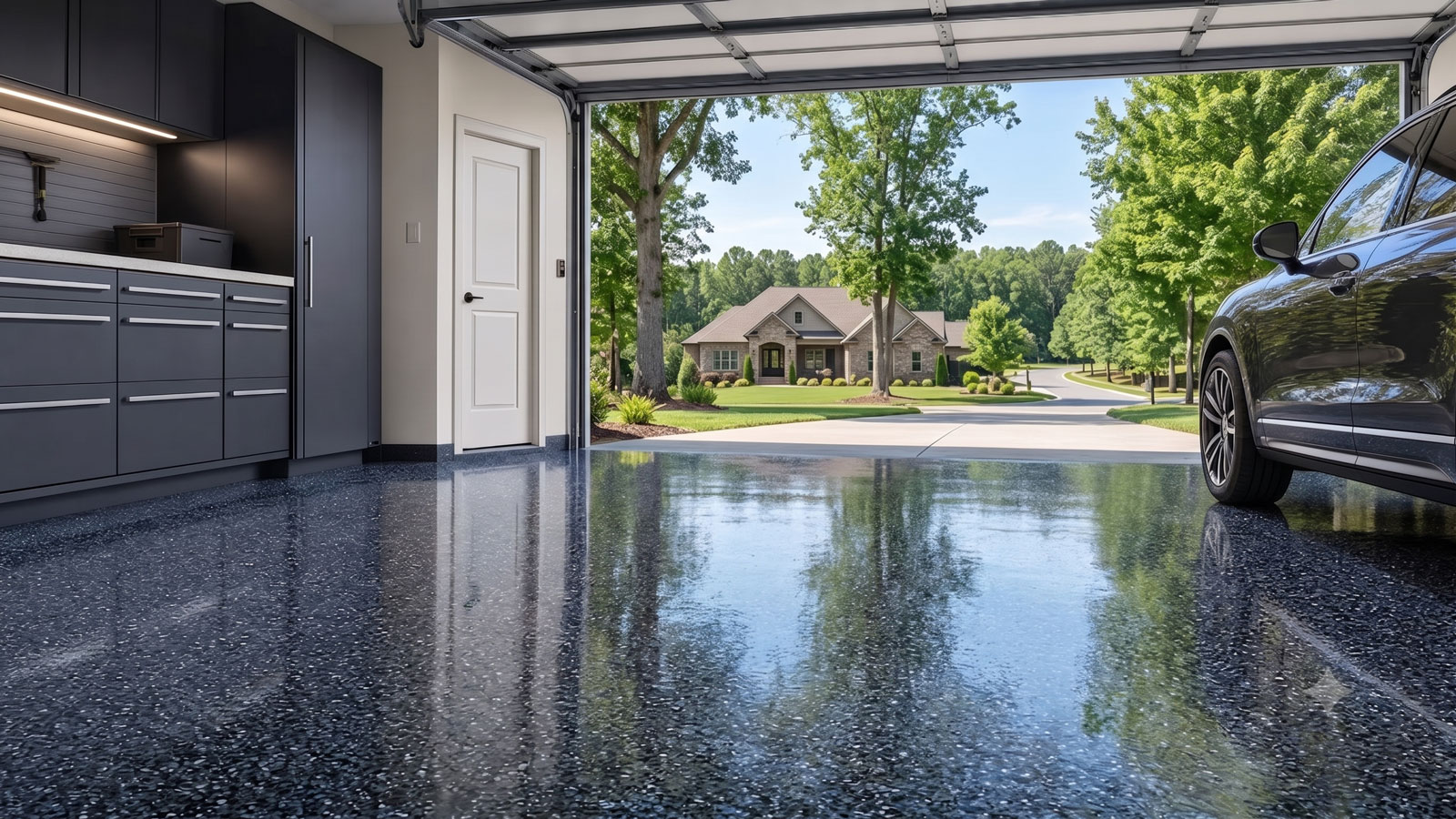
Garage Floor Coating in Catonsville, MD
Floor Coating Services in Catonsville, MD
Catonsville has one of the more thoroughly documented suburban-development histories in Baltimore County. A Maryland Historical Trust inventory for Winters Lane traces the village through early Frederick Turnpike settlement, the 1862 horse-drawn railway, an 1884 steam railway and electric streetcar expansion in the 1890s. The district's late-nineteenth-century estates gave way to smaller subdivisions and middle-income housing by 1940. That building history makes garage additions and later repours plausible inspection questions, but does not prove any specific garage contains century-old concrete.
Catonsville also occupies a plateau with developed drainage and stream corridors connecting toward the Patapsco watershed. Its historic-property survey described the village about six miles from Baltimore at an elevation near 550 feet. Topography is a public geographic fact rather than a moisture diagnosis. Whether runoff crosses a particular driveway threshold depends on local grades, roof discharge and the building's present condition.
Winter vehicles can bring gritty road-treatment residue inside even when exterior drainage is sound. A suitable epoxy, polyaspartic or decorative-flake finish may simplify maintenance, but first inspect previous paint, oil, patched cracks, old surface sealers and any persistent wetness. A coating cannot stabilize moving concrete or redirect stormwater; a useful project estimate starts with substrate assessment and identifies preparation and cure.
Local Market Insight
The Catonsville Winters Lane inventory documents transport-led development in 1862, 1884 and the 1890s, plus a roughly 550-foot plateau and changing residential patterns by 1940. House age does not equal garage-slab age, and elevation does not establish private drainage or moisture.
What Affects the Cost of Garage Floor Coating in Catonsville?
A garage associated with an older Catonsville property may have been added, extended or repoured decades later. That can produce previous floor coatings, transitions and patch materials not visible in the house's exterior appearance.
The contractor should inspect access, soundness, crack movement, old finishes and the actual water pathways. These affect preparation far more than the label 'historic' or a simple square-foot calculation.
- Garage additions after streetcar-era housing: Many Catonsville properties reflect long development histories, but the floor may be a later pour. Determine the real age and surface condition before assuming extra repair or compatibility.
- Old paint, oil and sealers: A long-used garage can contain floor paint, automotive residue and several earlier finishing attempts. Removal and mechanical profiling must be specified where those interfere with adhesion.
- Plateau slopes and private drainage: The historic survey's elevation figure describes community geography, not a wet garage. Examine the door sill, driveway grade and downspouts for actual water entry or long-term stains.
- Cracks and irregular concrete: Patches, transitions, joint movement and spalling can increase preparation. Stable surface defects and active structural conditions require different treatment before resin finishing.
- Detached layouts and equipment staging: Some older or altered homes can have separate garages, shelves and restricted entries. Include all edges, preparation access and clearing belongings in the project scope.
- Winter cleanup and topcoat: Snowmelt and treated-road grit raise cleaning and traction concerns. Choose texture and complete layers around use, temperature limitations and the needed return-to-service date.
Call for a clear, project-specific estimate — or request one online.
Frederick Road, Winters Lane and the Garage's Actual Construction History
The Maryland Historical Trust's Winters Lane Historic District documentation traces Catonsville's development from Frederick Turnpike settlement to horse-drawn railway service in 1862, steam rail in 1884 and electric streetcars in the 1890s. It also describes late-nineteenth-century estate subdivisions, smaller houses and a different mix of residents by 1940. These records provide multiple independent historical anchors without establishing when an individual detached garage was built.
A historic-looking home may have a garage added in the twentieth century, a floor poured during a later renovation or repairs from earlier vehicle use. The coating contractor should ask about those changes, move stored equipment and inspect the actual slab for old paint, sealer, cracks and weak patches.
A newer-looking floor may contain an incompatible existing finish or material that reduces adhesion. Proper mechanical grinding should produce a bondable concrete surface. Ongoing structural movement and chronic water intrusion require evaluation beyond a decorative layer.
A useful estimate identifies the observed condition, necessary coating removal, grinding, crack and edge work, complete resin layers and cure schedule. It should not charge for age-based repairs without finding a defect, nor promise that all older floors can be coated without assessment.
Catonsville's Plateau, Road Grit and Rainwater at the Threshold
The Winters Lane historic inventory describes Catonsville as a village on a plateau roughly 550 feet above tidewater, with Frederick Road and later rail connections helping shape its streets. The surrounding area drains through several local systems toward the broader Patapsco region. These regional characteristics do not tell a homeowner whether water reaches their specific garage.
Check the actual driveway apron and roof drainage after rain. A sloping lot may direct water away from the door, toward it or into a side entry depending on its grading. Water from winter tires and persistent substrate dampness are two other distinct possibilities. Only direct inspection and, when needed, suitable product-specific testing can distinguish them.
A professionally prepared floor finish can help wipe up winter grit and ordinary dirt on sound concrete, but it cannot reverse a driveway slope, repair an active foundation leak or stop movement. Address water entering from outside before applying decorative material.
For daily parking or hobby use, discuss finish texture, edge durability, cleaning and time away from the garage. The proposed system should satisfy actual concrete and temperature limitations rather than rely on assumptions from community topography.
Frequently Asked Questions
Does a historic Catonsville property always have an old garage slab?
No. The house and garage may belong to different construction periods, and slabs can be repoured. Inspect concrete, repairs and earlier coatings rather than estimating from the home's appearance.
Does Catonsville's plateau elevation prevent garage moisture?
No. Regional elevation alone cannot establish private water entry or slab moisture. Driveway grade, gutters, threshold conditions and substrate testing where necessary are the relevant checks.
Will epoxy eliminate winter road-grit cleanup?
No. A sound coated floor may be easier to clean, but deicing residue, mud and meltwater still arrive on vehicles and need routine removal.
Can an old garage floor be coated without grinding?
Not merely because it looks clean. Previous paint, sealers and concrete profile need assessment, and mechanical preparation may be essential to reliable system adhesion.
What belongs in a Catonsville floor-coating quote?
Ask for prior-finish removal, grinding, repairs, edges and joints, moisture evaluation if indicated, full coating layers, texture, cleaning guidance and safe vehicle-return timing.
Catonsville Neighborhoods & Local Context
Typical Project Cost
$3,000–$5,500
Typical two-car garage range. Final pricing depends on floor size, concrete condition, prep work, coating type, and finish options.
Helpful Guides